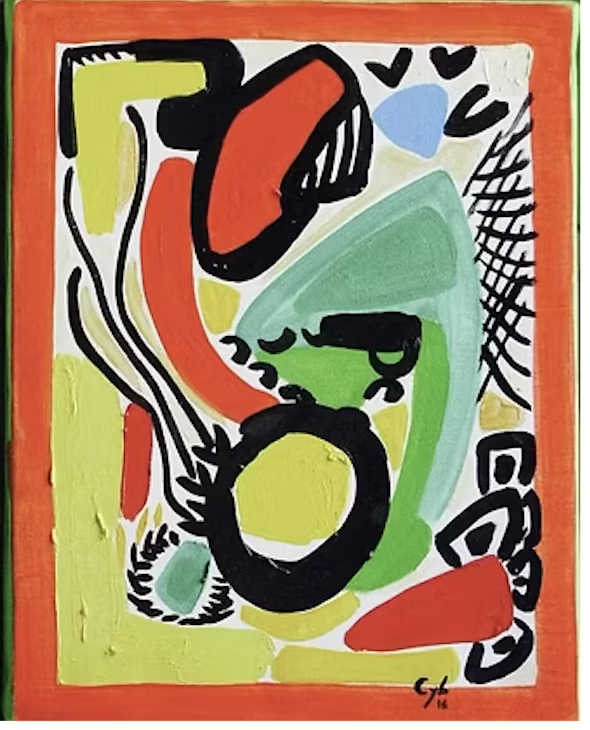
"Rilska" means "of the Rila" in Bulgarian. The tenth-century monastery of Saint John of Rila, rebuilt in the nineteenth century, constitutes a major spiritual center of the region, teeming with the colors of Orthodoxy. This place, as well as the icons in the crypt of the Alexander Nevsky Cathedral in Sofia, gave me the impetus and the audacity to bring abstraction and icons together.
The "Rilska" series manifests this attempt. Certainly colors as jewels have structured my work since the beginning, and the reference to icons as well, like a horizon — a beyond of painting that would be its completion or fulfillment. But the preciousness of the almost pure colors, assembled, almost set and enshrined by the painter's work, is adorned here for the first time with the painted green and red frame, meadow, vermilion or orange, of thirteenth-century icons.
This is not explicitly about religious themes, as with the abstract painter Manessier. But the question of the spiritual made sensible in a non-figurative manner remains present. And Kandinsky, then the future father of Abstraction, was meditating on his icon with a blue background, a Saint George slaying the dragon, when he named the second phase of Expressionism "Der blaue Reiter": the Blue Rider.
The joyful dynamism of this green and red contrast of icons has especially punctuated this "Rilska" series, like a hope beyond the darkness of the world.