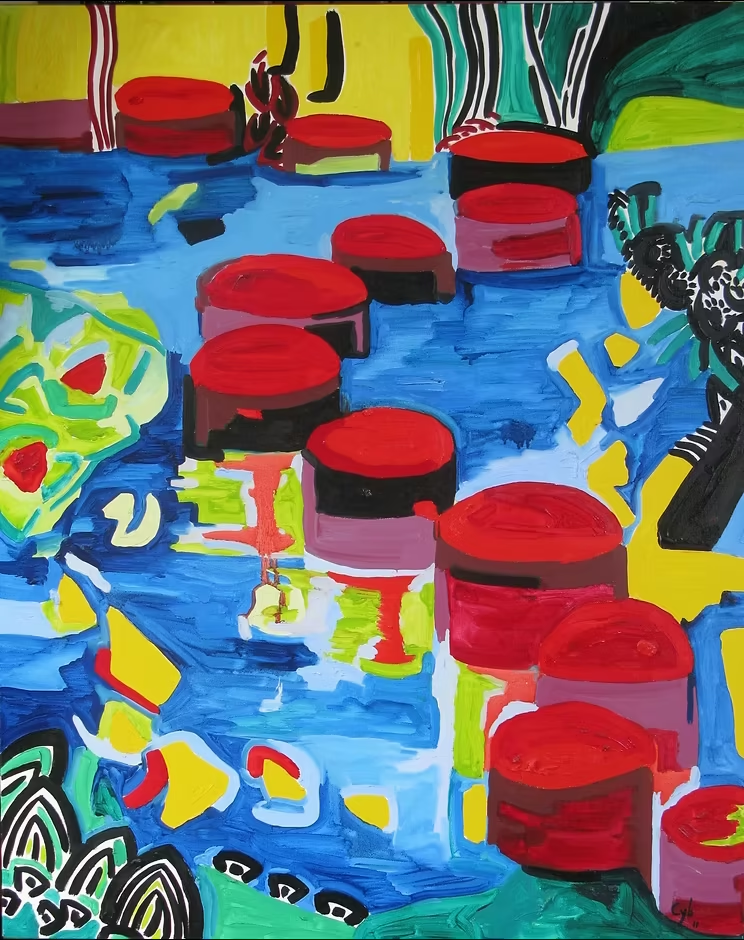
In Kyoto dreaming of Kyoto. The words are from Bashō, the great Haiku poet of the 17th century. This power of evocation of the real, power of dream within singular perception, untimely irruption of superimposed times — that is my experience of Venice. That is how, from a purely abstract approach, I had to yield to the call of the real rediscovered.
For Kyoto the experience differs. It is the dream, the evocative power of words — those of Kawabata, Tanizaki, the mingled depths of Haruki Murakami — that become pictorial reality. The presence of dry gardens, of their furrows, provokes meditation. Every detail of the furrows of the dry garden, and every element of every Japanese garden, inaugurates a pictorial meditation.
I am the furrow that transforms into water, I am the rock that transforms into fish. I am the carp, the dragon, the tiger.
In the time of gesture and brush, in the garden, paradise forever rediscovered, I am the rock, the samurai, the great kimono of shimmering silk.
In the chaos of stepping stones and stone blocks, a path takes shape, improbable and certain. The grasses that spring up, the mosses that climb, offer the gaze a journey of delight.
The abstract painter finds himself at home in this metamorphosis of forms and materials. Dreaming of Kyoto, painting the feast of colors, it is the reality of spaces dear to the heart that he summons through their song.